
One of the world’s most coveted burgers is now an NFT.
McDonald’s famous McRib, a barbeque-flavoured slider dubbed ‘The Most Important Sandwich of The Year’ has amassed a cult following in recent decades.
So strong, in fact, that the eponymous fast-food giant is giving 10 people the chance to win the burger as a digital token unlike any other.
“With the McRib NFT, you’ll never again have to say goodbye to the sandwich you love,” McDonald’s said on November 1.
i present to u the most important NFT. RT for a chance to win one of ten exclusive #McRibNFT
no purch. nec. 50 U.S./DC, 18+ only. winners need crypto wallet to receive NFT. rules: https://t.co/2QRhsPlpur pic.twitter.com/KYmWI67PhG
— McDonald's (@McDonalds) November 1, 2021
But just what does a McRib look like in NFT form?
And what’s the point if you can’t eat it?
In this article:
- What's an NFT?
- How are NFTs traded?
- What took NFTs mainstream?
- How are they linked to the arts?
- Are they here to stay?
Back up — what’s an NFT?
It stands for non-fungible token. Sounds less than delicious if you ask me.
Let’s break it down.
It’s easy to get caught up on the word ‘fungible’, but it’s much easier to understand what an NFT is if you switch out the word with ‘replaceable’.
So an NFT is a digital token that lives online, but it’s entirely unique —one you can never replace.
Still sound complicated? Let’s think of it in a different way.

Imagine you have a $5 note. When you’re making a transaction, you don’t care if that bill is unique.
That’s because out of the millions of notes in circulation, they’re all worth the same $5.
But what if you owned a note that was completely unique — instead of a picture of the Queen on one side, there’s an image of Homer Simpson.
That $5 note is suddenly non-fungible. And its unique characteristics could make it far more valuable than the $5 it represents.
NFTs work in the same way — the difference is they’re traded entirely online.
These special, digital tokens are rooted in blockchain technology — the same system that helps us keep track of the ins and outs of cryptocurrency.
More on what this technology looks like, and what it can be used for, in this article here.

NFTs are rooted in Blockchain technology and most commonly traded with Ether, a cryptocurrency from the Ethereum platform.
How are NFTs traded?
As an asset class that’s based in the digital realm, it makes sense that NFTs change hands online.
Since they started gaining ground in 2017, digital bazaars have cropped up to support the burgeoning NFT exchange.
One name that’s become synonymous with NFT trading is Opensea, the largest marketplace for NFTs in the world.
Opensea CEO Devin Fizer put together a non-fungible token bible in 2020, detailing how these unique digital tokens have manifested since the dawn of the internet.
“Domain names, event tickets, in-game items, even handles on social networks like Twitter or Facebook, are all non-fungible digital assets; they just vary in their tradeability, liquidity, and interoperability,” he stated.
“We have tons of digital stuff, we’ve just never really owned it.”
This is where the blockchain technology comes in: it establishes a chain of ownership that’s immutable, supported by a ledger that everyone can follow for increased transparency.
Nowadays, there’s also a set of standards that allow non-fungible tokens to be traded across ecosystems, which basically means buying an NFT is now a much simpler process.
Fizer explained that standards are part of what makes non-fungible tokens powerful.
“They give developers the guarantee that assets will behave in a specific way and describe exactly how to interact with the basic functionality of the assets.”
More broadly, it’s taken this relatively new realm from a closed, insular economy to an open marketplace, where anyone can get in on the digital token game.
What took NFTs mainstream?
One word: CryptoKitties.
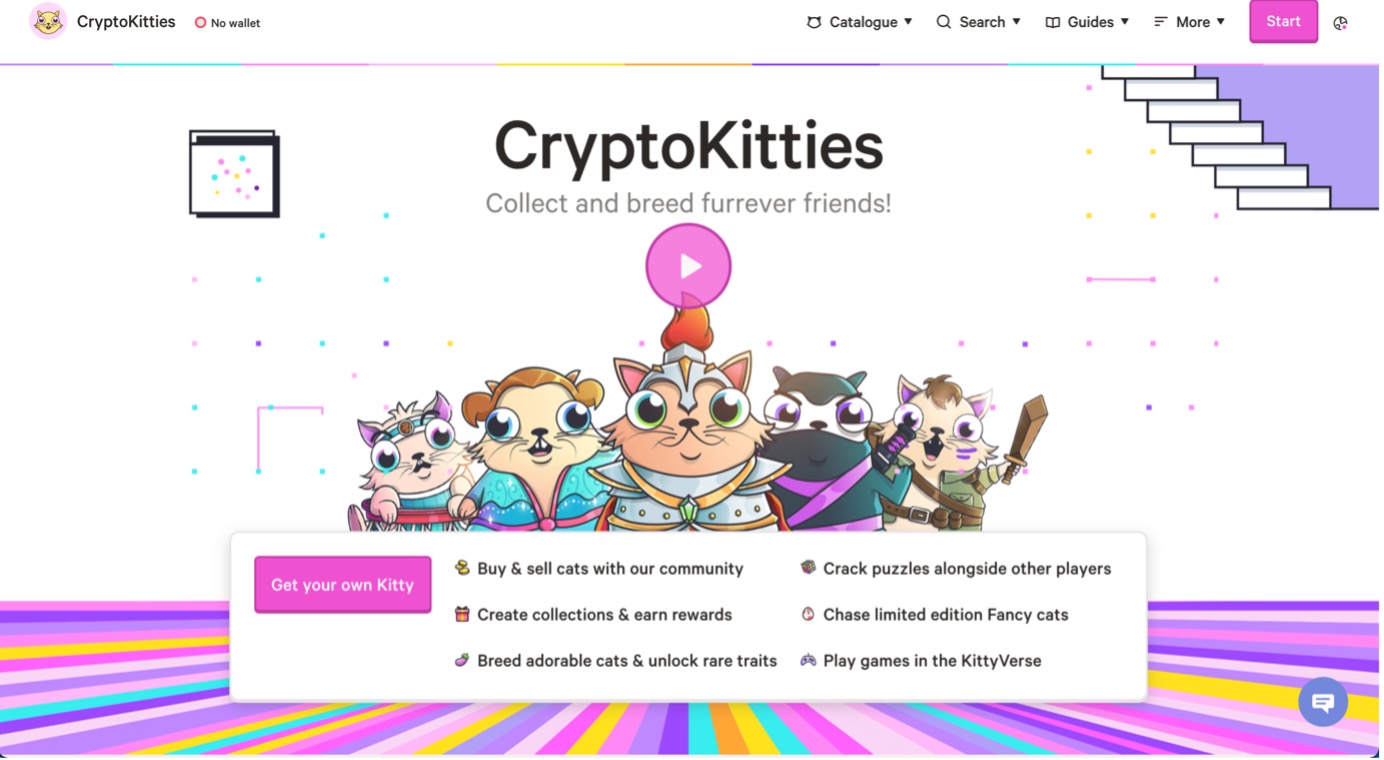
A screengrab from the CryptoKitties landing page, where users can breed and trade non-fungible felines.
Launched back in 2017, this online marketplace introduced a generation of Pokemon traders to the world of non-fungible tokens.
CryptoKitties allows users to breed digital cats together to create new iterations, which they can pay for and trade with Ethereum — a type of cryptocurrency.
Every time a transaction takes place, it’s written on the blockchain, meaning it officially becomes part of the CryptoKitties universe.
But these non-fungible felines can cost a lot of coin: one sold for a whopping 600 Ethereum, or US$172,000, in September 2018.
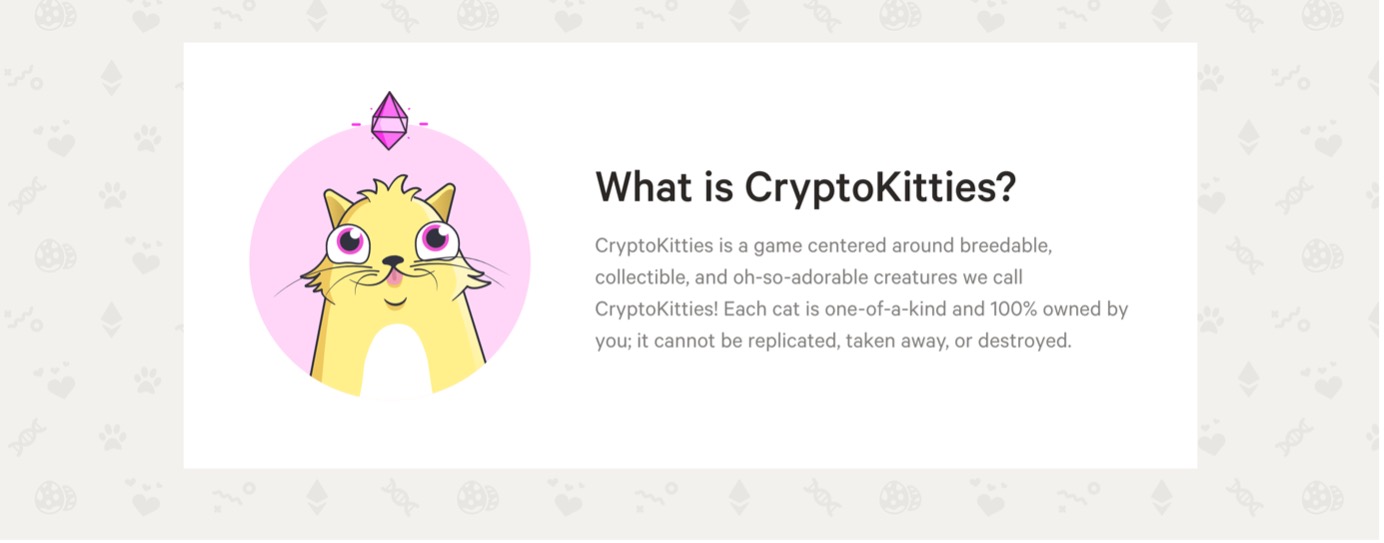
No one quite knows just why it sold for just that much — not even CrytpoKitties itself.
But the hefty value of a single token could serve as a harbinger of the things to come as NFTs take the art world by storm.
How are they linked to the arts?
NFTs have only recently become mainstream, but artists and musicians have been a huge part of their success.
More than just an emerging venture, it’s become a way for creators to continue to profit as their art gains traction in the digital world.
If someone buys an NFT of a song or an artwork and trades it down the track, the artist can still benefit commercially thanks to smart contracts that recognise both creators and owners.
Fizer marvels at how digital art turned out to be a natural fit for non-fungible tokens.
“A core piece of what makes physical art valuable is the ability to reliably prove the ownership of a piece and display it somewhere, something that’s never been as true in the digital world …
Just like CryptoKitties, this avenue has proved extremely lucrative for some creators — although the profitability isn’t always widespread.

‘The First 5000 Days’, an NFT collage from digital artist Mike Winkelmann (also known as Beeple) sold for US$69.3 million at Christie’s in March 2021.
But the OpenSea CEO believes the power of this new asset class lies in how it can bring creators together.
“The NFT ecosystem is a tight-knit group of incredible innovators: [it includes] everyone from enthusiasts to developers to gamers to entrepreneurs to artists.”
Are they here to stay?
Honestly, it’s tough to say.
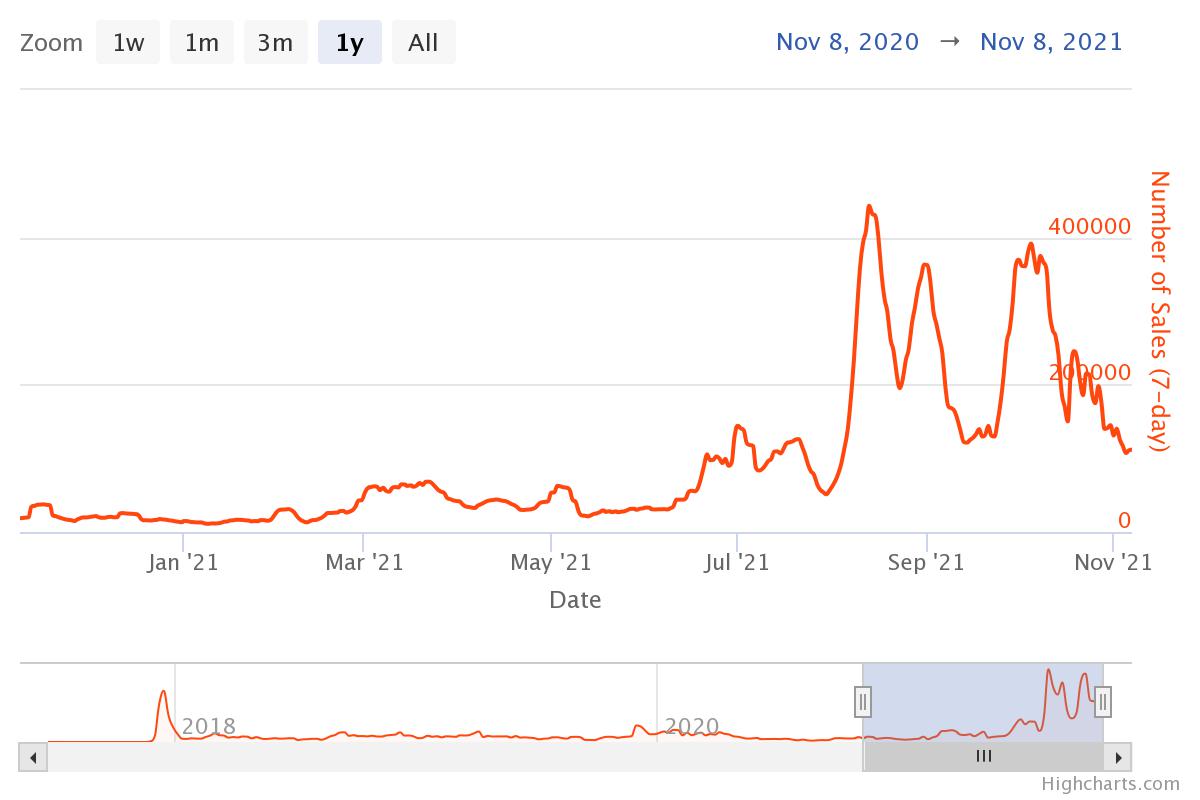
In the past year, the number of NFT sales have been incredibly volatile.
This time last year, NFT sales in a single week totalled just under 19,000.
Nowadays, it’s nearly six times that at almost 112,000.
But that’s not to say the ride hasn’t been choppy.
The graph below charts how the average number of NFT sales every seven days has ebbed and flowed in the last 12 months.
Source: NonFungible.com
Activity spiked in August, but it’s been on a slow decline in the months since.
This trend has also been mirrored in terms of the US$ spent on NFT sales in a single week.
In the last 12 months, the total has grown from US$2.15 million to a staggering US$277 million.
But that’s small fish compared to the peak in late August, when a week’s worth of NFT sales totalled US$1.65 billion.
.jpeg)
Source: NonFungible.com
With such high-highs (and the accompanying low-lows) it’s hard to forecast when this emerging asset class will gain a consistent foothold in the market.
But as creators continue to mine the ever-evolving world of popular culture, there may just be enough skin in the game for NFTs to gain relevance — and one day become an economically viable asset all their own.